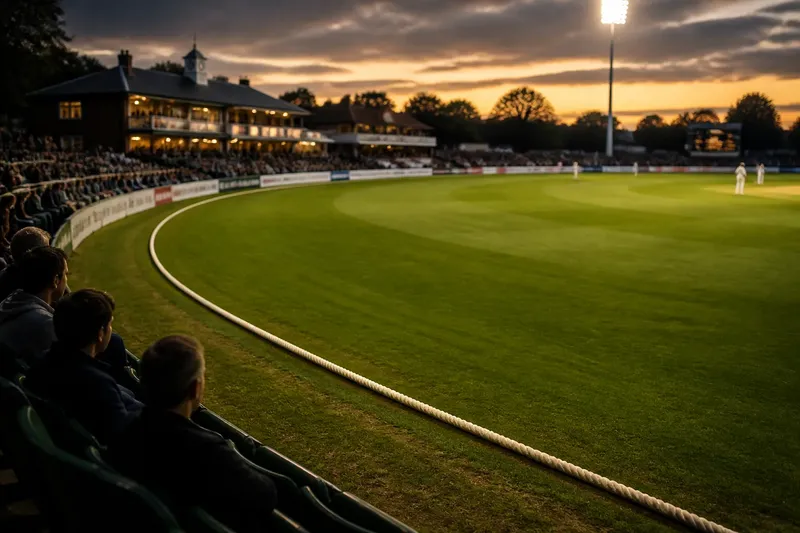
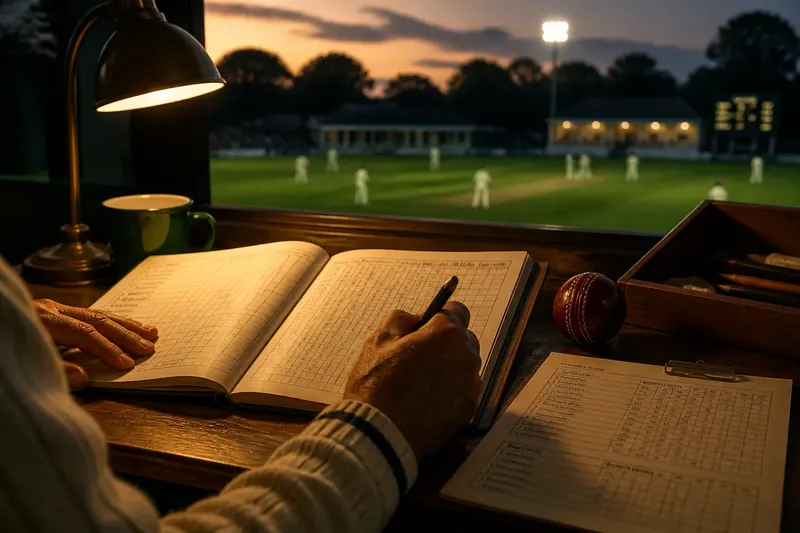
A First Look Around a Cricket Pavilion
A first look around a cricket pavilion can help you read its shared spaces with ease, notice local customs and feel at home without assuming every club is alike.
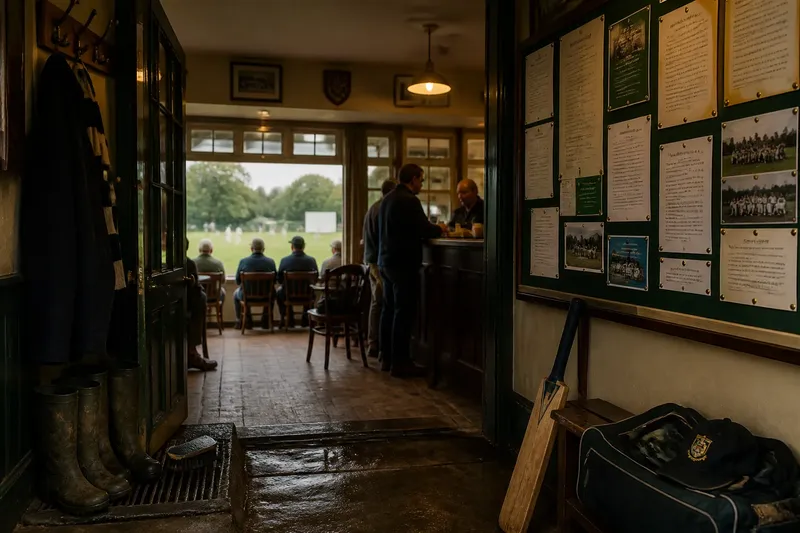
The most common mistake on a first visit to a cricket pavilion is treating it as either a public corridor or a private clubhouse. That can make an ordinary entrance feel awkward: you may walk past useful signs, interrupt a conversation or hesitate where visitors are welcome. A first look around a cricket pavilion works best as quiet observation, guided by the signs and the people using the space.
Pavilions differ from club to club. Some have a single room beside the ground; others combine changing areas, a bar, a kitchen, a balcony and rooms used by several groups. The aim is not to uncover a universal set of customs, but to notice how this particular place is organised before deciding where to go or what to ask.
Begin at the entrance
Pause just inside the entrance, leaving the doorway clear. Look for a reception desk, an open door, a sign asking visitors to report to someone, or a notice about match-day access. These small cues help you work out whether the pavilion is being used for a public event, a club gathering or both.
Check the immediate surroundings before moving further in. A shoe scraper, coat hooks or a row of muddy boots may mark a practical transition between the outside and an indoor space. Do not assume that a room is open simply because its door is ajar; a polite greeting to someone nearby is often the clearest way to establish where visitors should go.
If you have come to watch a match, say so plainly. You could ask, “Is there a place for spectators to sit inside?” That is more useful than guessing from a room’s appearance, and it gives someone a chance to point out any areas reserved for players or staff.
Read the noticeboard
Noticeboards often explain the daily life of a club more directly than its architecture does. Look for fixtures, team selections, ground rules, social events, fundraising notices and information about who to contact. A crowded board can be a working record rather than a carefully arranged display, so give it a moment instead of trying to read every sheet.
Notice the form as well as the message. A handwritten note pinned beside a printed fixture list may be a quick update, while a clearly headed notice may apply to the whole building. Look at dates and wording before treating an old-looking announcement as current; if its meaning affects where you should go, ask a member rather than relying on a guess.
The board may also show how the club communicates across different groups. Information for juniors, visiting teams and social members can share the same space. That does not mean every notice applies to every visitor, so follow the instructions that match your reason for being there.
Notice shared spaces
Move through the areas that appear open to visitors and observe how people use them. A row of chairs facing the ground may be for watching play; tables set with cups may be part of a tea interval; a bar or servery may have its own queue or opening arrangements. Watch where others pause, but treat that as a clue rather than a rule.
Look for boundaries in ordinary details: a rope across a doorway, a sign on a closed room, or kit bags gathered beside a wall. Changing rooms and equipment stores are not casual viewing spaces, even when they are visible from a corridor. If you are uncertain, stay in the clearly shared area and ask before proceeding.
Sound and movement can tell you when a space is in use. A quiet room may be set aside for a team conversation, while a busy passage may be a route between the ground and the changing area. Stand to one side when people are carrying kit or serving refreshments, and avoid blocking a doorway while reading a notice.
Follow the local rhythm
A pavilion’s customs often become easiest to understand around a match interval, when people move between the ground and indoor rooms. You may see players return for refreshments, spectators settle near a window, or volunteers carry trays. Notice what is open to everyone and what seems to be arranged for a particular team or group.
Imagine you arrive during a village match and find a table of tea near the main room, with a small sign asking visitors to wait to be served. You wait behind the other guests, ask whether tea is available to spectators, and follow their lead on where to sit. The expected result is simple: you learn the local arrangement without assuming that every pavilion serves refreshments in the same way.
Not every custom needs decoding. If people greet one another, a brief hello is enough; you do not need to learn names or join a conversation. It is also not worth the effort to inspect every trophy, photograph or framed shirt on a first visit. Choose one or two details that catch your eye, then leave the display for another time.
What should you look for?
Can visitors enter every room?
No. Public access varies, and some rooms are reserved for players, officials or club members. Use signs and open, shared areas as your guide, and ask before entering a space that seems private.
Should you speak to someone first?
If the entrance has a welcome desk, steward or club contact, start there. Otherwise, a brief question to someone who is not busy is usually more considerate than wandering in search of a place to sit.
What can the noticeboard tell you?
It may explain fixtures, access, events and practical arrangements, but not every sheet will be current or relevant to you. Read the heading and date, then confirm anything that affects your visit with a club representative.
Is there a correct way to behave?
There is no single code shared by every club. Keep shared routes clear, respect closed rooms and follow the instructions posted at that pavilion.
Leave with a clear sense
Before heading back outside, take a moment to check whether you have left anything behind and whether the route you used remains clear. If you have been shown a seating area or a refreshment point, remember that arrangement rather than trying to memorise the whole building.
A first look around a cricket pavilion is most useful when it leaves you with a few practical observations: where visitors are welcomed, which spaces are shared and where local information is posted. Those details make a return visit easier, while leaving room for the next club to have its own character.