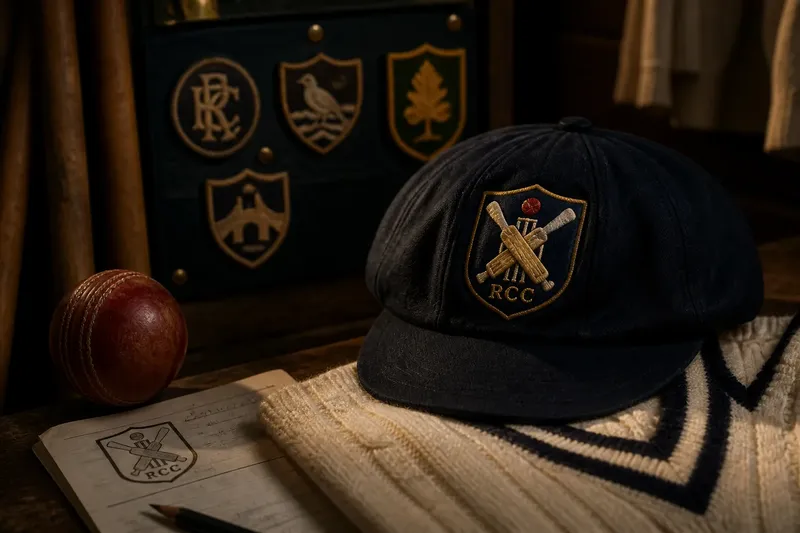
The All-White Matchday Myth
Cricket clothing changes with format, era and setting. Learn how to read a team’s kit and choose suitable spectator clothes without mistaking tradition for a rule.
The common mistake is to assume that cricket clothing must be all white; it can leave spectators misreading a coloured team kit or worrying that their own clothes break an unwritten rule. Cricket whites are a familiar tradition, but the right kit depends on the match, competition and occasion.
Start with the event rather than a single visual clue. Multi-day cricket is strongly associated with white shirts and trousers, while many limited-overs competitions use coordinated coloured kits. Club customs and competition regulations can vary, so the fixture information is more useful than a photograph taken at another ground.
Format and kit
In traditional multi-day cricket, players commonly wear white shirts and trousers, sometimes with a knitted sweater or sleeveless vest. The simple palette has become part of the game’s visual identity, but the cut and details of the garments vary by team and period.
Many limited-overs sides wear coordinated colours. Shirts, trousers and caps may share a team palette, with branding or sponsor marks on the shirt. This is a different kit convention, not a sign that the match is less formal.
Neither convention applies uniformly to every competition. Some events retain white clothing; others specify coloured kits. Check the match listing or organiser’s guidance if you need to know what players are expected to wear.
Reading the setting
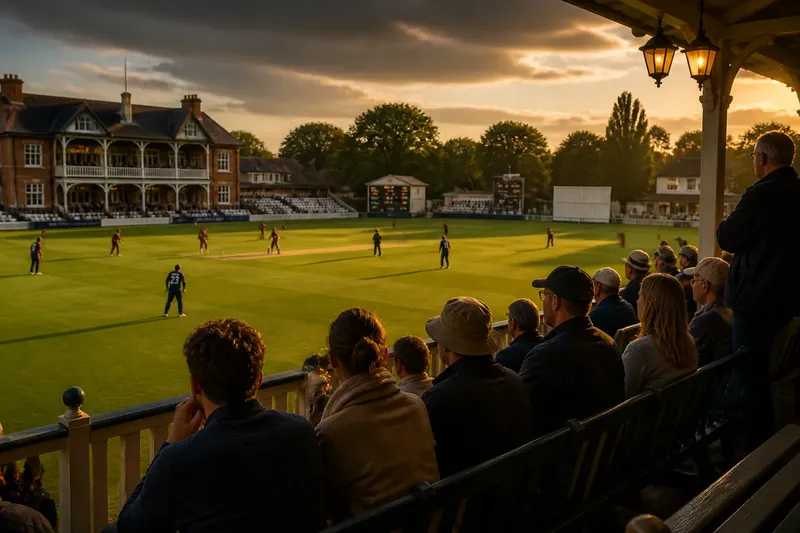
A historic pavilion or traditional ground does not determine the players’ clothing. A contemporary competition can take place in an old setting, just as a club match may use whites or colours according to local rules. Treat the ground as context, not as a dress code.
Photographs need similar care. A picture may show a different season, format or occasion, so look for its caption and date before using it to interpret a current fixture. The full outfit can offer clues about style and period, but it cannot identify either with certainty.
For a clearer reading, compare the fixture details with both teams’ clothing and any visible competition branding. If those clues do not settle the question, check the programme or ask the organiser.
Clothing across eras
Cricket whites are not one unchanging uniform. Shirts, collars, knitwear, caps and trouser cuts have varied, while the broad white appearance has remained recognisable in settings where that tradition continues.
Coloured kits belong to the game’s visual language too. Team palettes make sides visually distinct and can identify a competition or a particular design period. A photograph’s caption is still the better source when precise identification matters.
Players and spectators
Playing kit is not a general dress code for the ground. Spectators usually choose ordinary clothes suited to the weather and venue, while a club may have separate expectations for players, guests or a pavilion event. If you have been invited, ask your host about any local custom rather than copying the team’s uniform.
Say you are invited to a club’s weekend match. The invitation describes a short-format fixture, but an older online photograph shows the home side in whites; a current club notice shows a coloured kit for the competition. You check the notice, wear comfortable clothes for watching, and ask your host whether the pavilion has a particular expectation. The current event details guide your choice, while the old photograph remains a clue to another occasion.
Choosing what to wear?
Do spectators need to wear white?
Usually, no. White is associated with players in some cricket settings, but spectators generally dress for the weather and ground rather than copying a playing uniform.
Why do some teams wear colour?
Many limited-overs competitions use coordinated coloured kits to distinguish teams and express their visual identity. The competition’s rules determine which kit is appropriate.
Can a club match use coloured clothing?
It can, depending on the competition and local rules. Check the fixture information or ask the club if the listing is unclear.
Are cricket whites always pure white?
Not necessarily. Knitwear, caps or trim may add colour, and light can change how fabric appears. The term generally describes the overall traditional look rather than identical shades throughout.
Useful checks
When a kit seems unexpected, use the following checks to decide what to look at next:
- Fixture format: If the listing names the format and competition, use those details to interpret the kit; if it does not, check the organiser’s notice.
- Both teams: If players on a side wear coordinated colours, treat that as evidence of a team kit; if only one item differs, check the rules before drawing a conclusion.
- Event notice: If the club or competition explains a special kit, follow that information; if no notice is available, ask the organiser.
- Who is dressing: If the question concerns a spectator, choose ordinary clothes suited to the weather; if it concerns a player, follow the team’s kit guidance.
- Image context: If a photograph has a caption or date, compare it with the current fixture; if it lacks context, do not use it to decide today’s dress expectations.
- Local custom: If an invitation mentions a pavilion or club event, follow its stated dress guidance; if it says nothing, ask the host rather than assuming the playing kit applies.
Clues worth weighing
A single cap, sleeve trim or shade of trousers is rarely enough to identify a match’s format. Those details may reflect a team choice, a local rule or a particular occasion, so give more weight to the fixture listing and the event’s own guidance.
It is not worth the effort to inspect tiny colour differences in a photograph when the match details are available. The useful question is which clothing convention fits this event, rather than which look counts as the only authentic cricket uniform.
For a quick reading of cricket clothing, check the event first, then consider the team kit and setting together. That gives you a sounder basis for understanding cricket whites and coloured uniforms—and for choosing suitable clothes as a spectator.